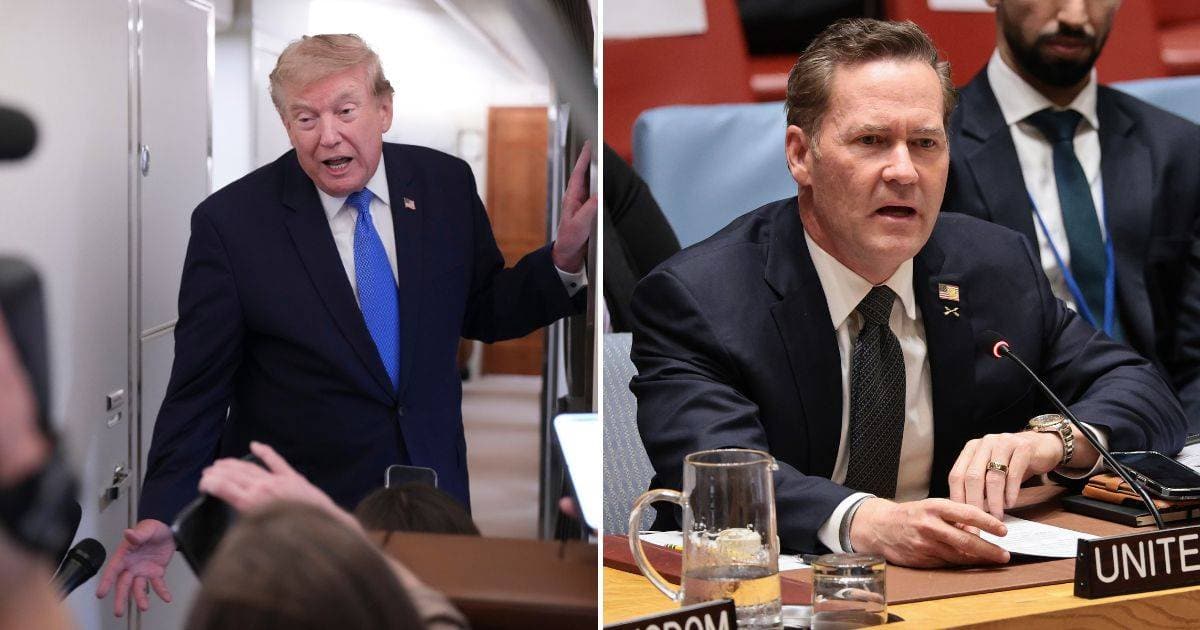
Trump ignores Strait 'love taps' as Waltz and McRaven clash over ceasefire
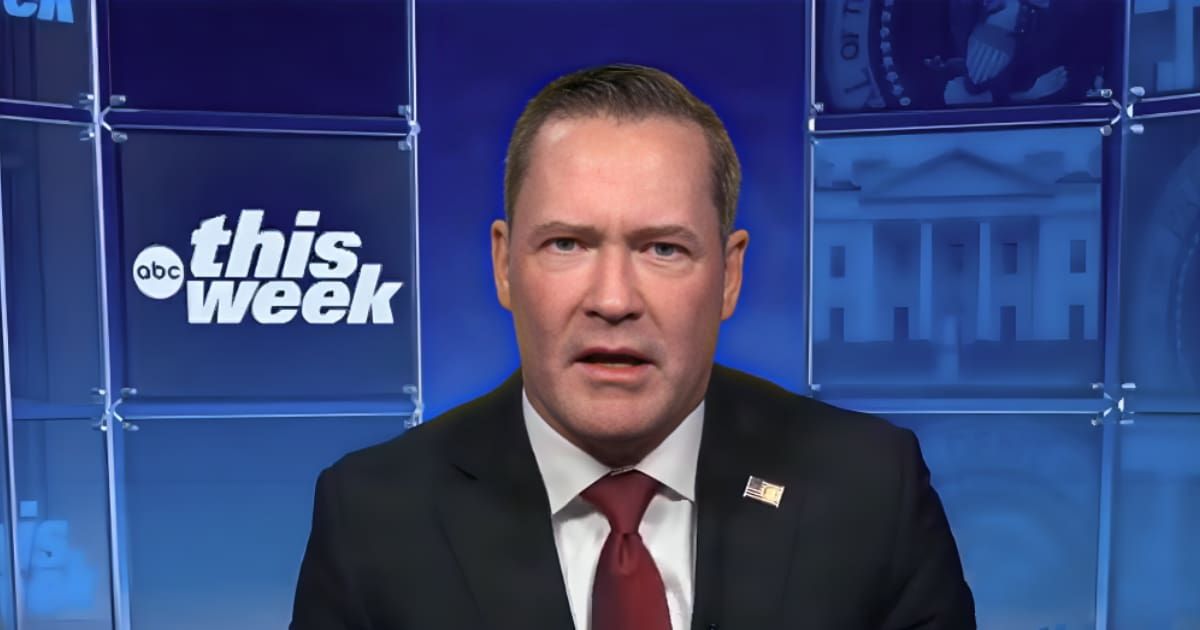
WASHINGTON, DC: A major rift has emerged within the US national security establishment regarding the status of the fragile ceasefire with Iran.
Mike Waltz, the US ambassador to the United Nations, asserted on Sunday, May 10, that President Donald Trump is giving diplomacy "every chance" before authorizing a return to hostilities.
This comes even as the two nations continue to exchange direct fire over the Strait of Hormuz, actions the president dismissed as mere "love taps."
While the administration maintains that the ceasefire remains intact, military experts are raising alarms.
Retired Adm William McRaven, the former commander of US Special Operations Command, countered the official narrative, stating bluntly that there is no ceasefire "when you're shooting at each other."
“The fact of the matter is, when you're shooting at each other, then you no longer have a ceasefire.”
— This Week (@ThisWeekABC) May 10, 2026
Adm. William McRaven, former U.S. Special Operations commander, says the ceasefire in Iran has been “put aside.” https://t.co/PxrejOKKhb pic.twitter.com/ETcQeTWQRS
The dispute highlights a high-stakes gamble by the Trump administration to secure a 30-day deal through Pakistani mediators, even as the global economy reels from soaring oil prices caused by the continued obstruction of the Strait.
Commander-in-chief defines ceasefire terms
Ambassador Waltz clarified that the authority to declare a breach of the truce rests solely with the executive branch.
"[It is] up to President Trump as commander-in-chief to determine what constitutes a violation," Waltz told ABC News, emphasizing that the president is balancing the need for military action against the potential for a negotiated settlement.
Despite Iran’s own accusations that the US has violated the agreement, the president has chosen to ignore the recent tactical exchanges to keep the door open for Pakistani-led mediation.
U.N. Ambassador Mike Waltz says U.S. drones over Kuwait and the UAE is not a violation of the ceasefire with Iran.
— This Week (@ThisWeekABC) May 10, 2026
“[It’s] up to President Trump, as Commander in Chief, to determine what constitutes a violation, when to go back to military action, or when to continue to give… pic.twitter.com/H9Lz8GzKl1
Waltz defended the decision to delay further bombing, noting that mediators have specifically asked for more time to find a peaceful resolution.
This strategic patience exists despite the president’s earlier threat to destroy Iran's largest power plants if the Strait of Hormuz was not opened within 48 hours, a deadline that has long since passed without the threatened retaliation.
Waltz characterized the current efforts as a 50-day attempt to solve a "50-year-old problem," shifting the focus toward a new UN resolution aimed at preventing any nation from blocking international waterways.
Admiral William McRaven warns thirty days is insufficient
The administration’s proposal involves a one-page memo that would see Iran gradually open the Strait of Hormuz while the US eases its blockade over a 30-day window.
During this period, the two countries are expected to negotiate the fate of Iran’s enriched uranium, a core objective of the conflict.
However, Admiral McRaven expressed deep skepticism regarding this timeline, calling the 30-day window "way too compressed" for such a complex issue.

Drawing a comparison to the 2015 Joint Comprehensive Plan of Action (JCPOA), which took over two years to finalize, McRaven warned that expecting a significant nuclear breakthrough in a month is unrealistic.
While the current memo does not explicitly mention nuclear terms, the administration’s primary goal remains preventing Iran from achieving the capability to build a nuclear weapon.
Iranian state media confirmed on Sunday that Tehran has sent a response to the US proposal via Pakistan, though the specific details of their counteroffer remain undisclosed.
Global oil prices soar during obstruction
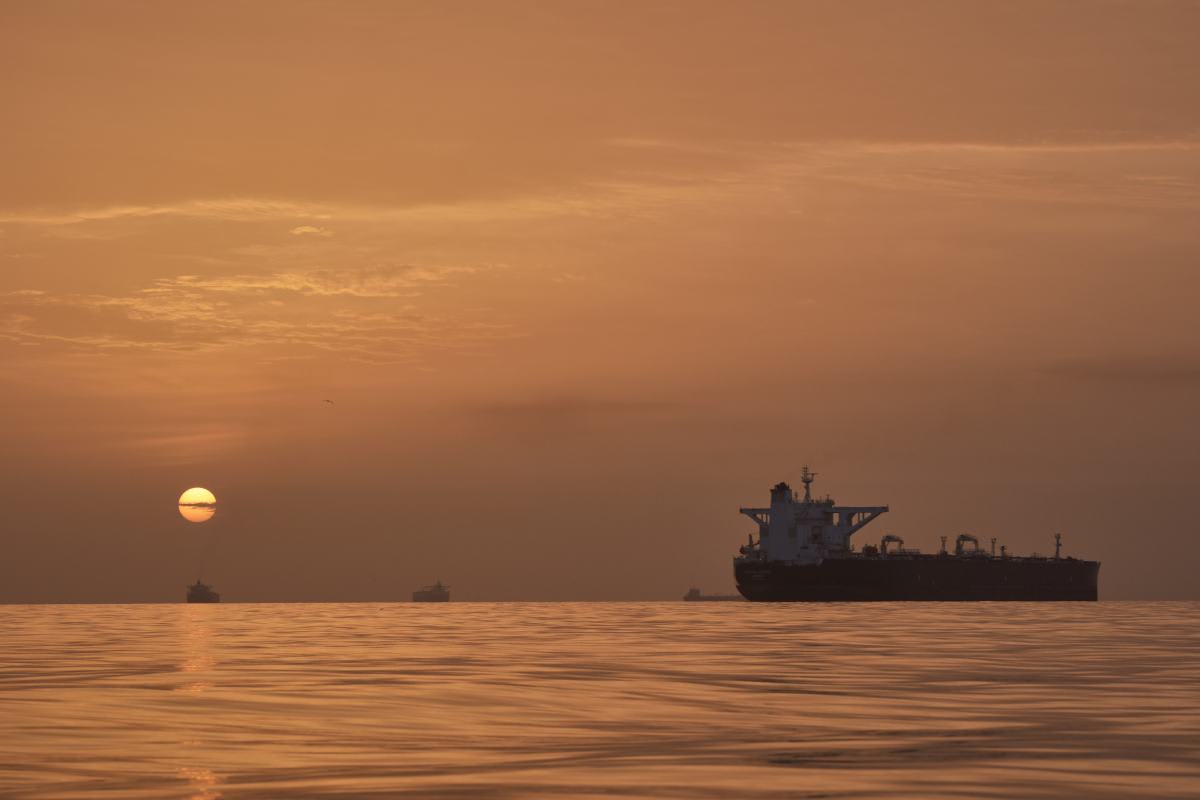
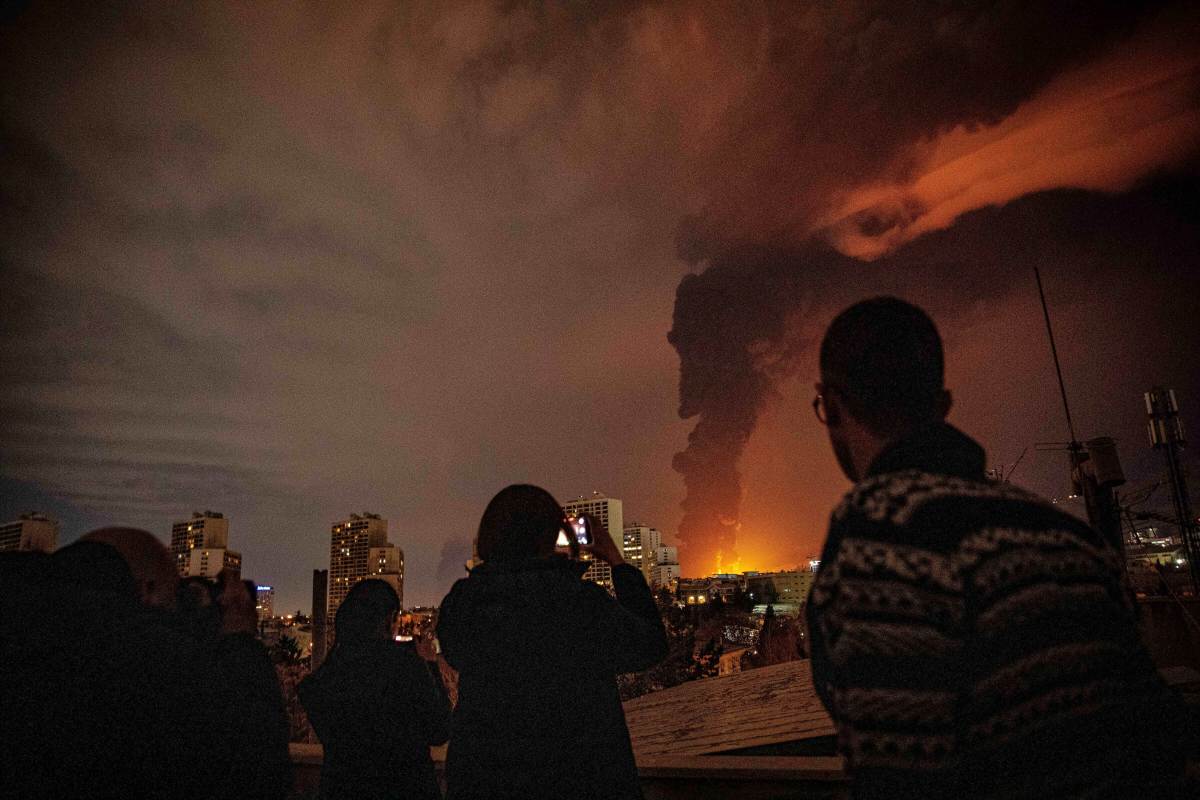
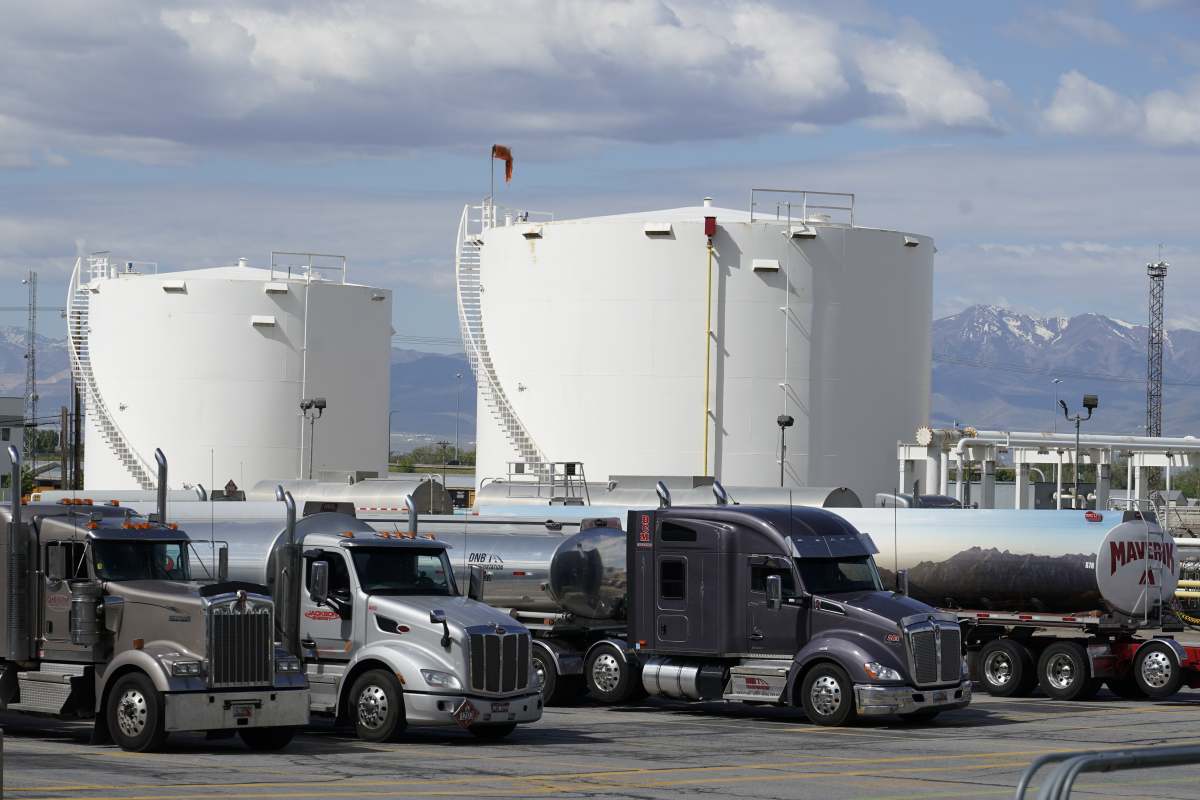
As the diplomatic maneuvers continue, the practical reality on the water remains volatile. The Strait of Hormuz remains closed to free shipping, a situation that has sent global oil prices to record highs over recent weeks.
Waltz criticized Iran’s continued obstruction but admitted that the president has chosen not to follow through with previous ultimatums to allow diplomacy to proceed.
The US is now pivoting toward international legal pressure, pushing for a UN resolution to establish that no country can legally block shipping in an international waterway.
This move seeks to provide a multilateral framework for the crisis, even as the administration acknowledges that the current exchange of "love taps" risks spiraling back into full-scale hostilities if the 30-day negotiation window fails to produce a result.