Bessent takes charge of US delegation as China trade talks kick off in Paris
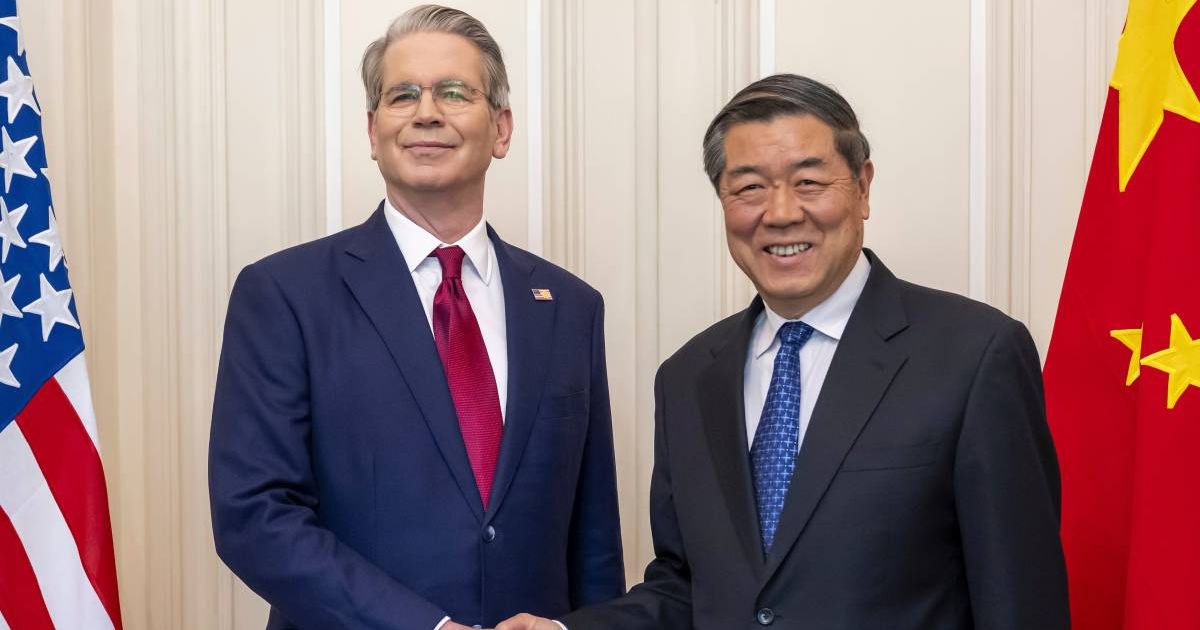
PARIS, FRANCE: High-ranking officials from Beijing and Washington convened in Paris on Sunday, March 15, to initiate a new round of economic and trade negotiations, according to the Chinese official news agency Xinhua.
US Treasury Secretary Scott Bessent and Chinese Vice Premier He Lifeng led their respective delegations in discussions designed to stabilize the complex financial relationship between the world's two largest economies.
These talks are widely viewed as the primary precursor to a state visit by President Donald Trump to Beijing, scheduled for March 31 to April 2.
While the White House has publicized these dates for the summit with Chinese leader Xi Jinping, Beijing has yet to officially confirm the visit.
Secretary Bessent emphasized on Thursday that his team remains focused on delivering results that prioritize American farmers, workers, and businesses.
Trade truce follows triple-digit tariffs
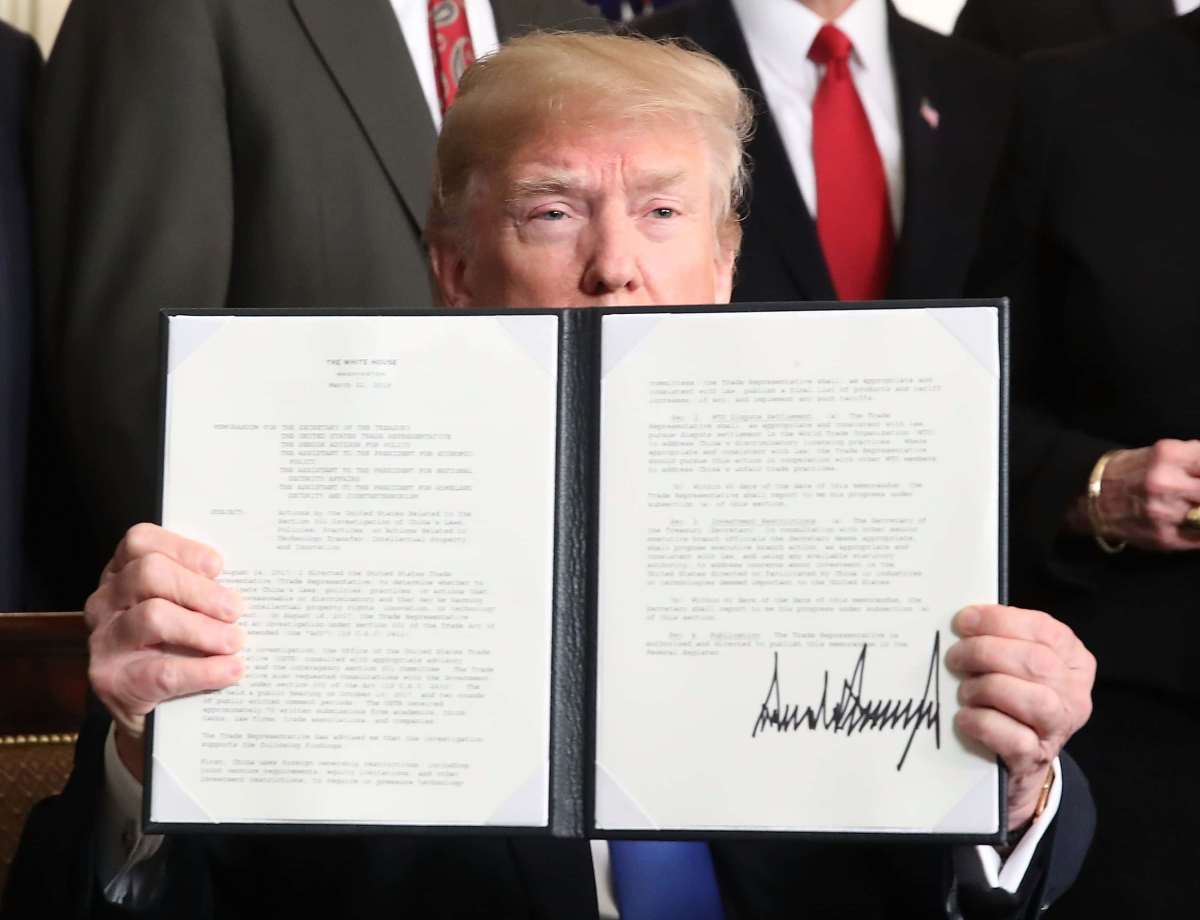
The upcoming summit will mark the first visit by a US president to China since 2017.
Relations have been shaped recently by a one-year trade war truce established five months ago in Busan, South Korea.
That agreement ended a period of severe escalation where tit-for-tat tariffs had soared into triple digits before both nations agreed to a temporary de-escalation.
Despite the truce, structural tensions remain high. China’s commerce ministry recently voiced opposition to the Trump administration’s latest trade investigation into 16 trading partners.
This new probe follows a Supreme Court ruling that struck down previous sweeping global tariffs, potentially opening a legal pathway for the US to impose fresh duties on Chinese goods.
Global energy crisis enters bilateral agenda

A significant new factor in the Paris discussions is the ongoing war with Iran and its impact on global energy markets.
With oil prices and supplies causing international anxiety, the talks in Paris are expected to touch upon maritime security.
President Trump stated on Saturday that he hoped China and other nations would deploy warships to the Strait of Hormuz to ensure that the waterway remained "open and safe."
Economists suggest that the Paris meeting is the most critical bilateral encounter before the leaders meet in person.
Gary Ng, a senior economist at Natixis, noted that the key challenge is whether the two sides can manage existing disagreements.
While Iran is a pressing new variable, analysts indicate that Beijing remains deeply concerned about the perceived "flip-flopping" of US trade policies.
Paris talks latest stop in global US-China negotiation tour

The Paris talks represent the latest stop in a global negotiation tour; Bessent and He have previously met in Geneva, London, Stockholm, Madrid, and Kuala Lumpur since last year.
This consistent engagement aligns with remarks from Chinese Foreign Minister Wang Yi, who recently characterized 2026 as a "big year" for China-US relations.
While the Chinese foreign ministry has maintained caution regarding the formal confirmation of the state visit, Wang Yi confirmed that a robust "agenda of high-level exchange" is already on the table.
The outcome of the Sunday meetings in Paris will likely determine the tone of the upcoming summit and whether the current trade truce can be transformed into a more permanent economic framework.