2 GOP senators threaten to block Trump's Iran war at day 60: 'I would vote not to authorize'
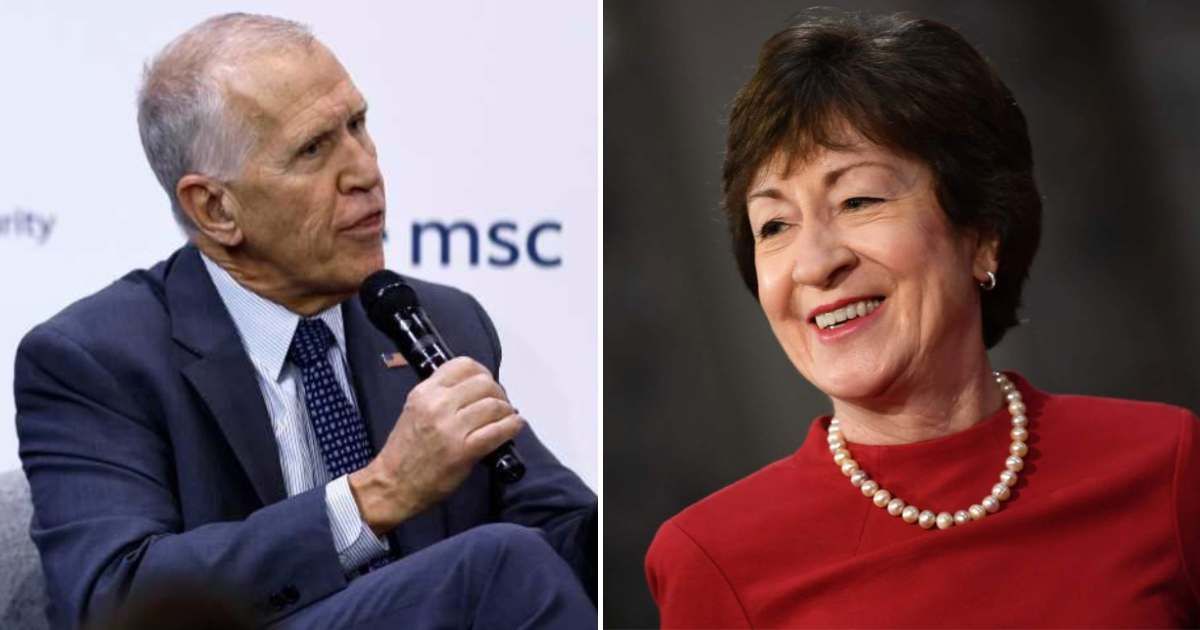
WASHINGTON, DC: Two Republican senators, Susan Collins and Thom Tillis, on Friday, April 17, signaled they might reconsider their positions on President Donald Trump’s authority to continue military operations against Iran without congressional approval.
The shift comes as the conflict approaches the 60-day threshold outlined in the War Powers Resolution. Lawmakers from both parties have been debating the scope of presidential authority amid ongoing hostilities.
Senators raise concerns as Iran war nears 60-day deadline
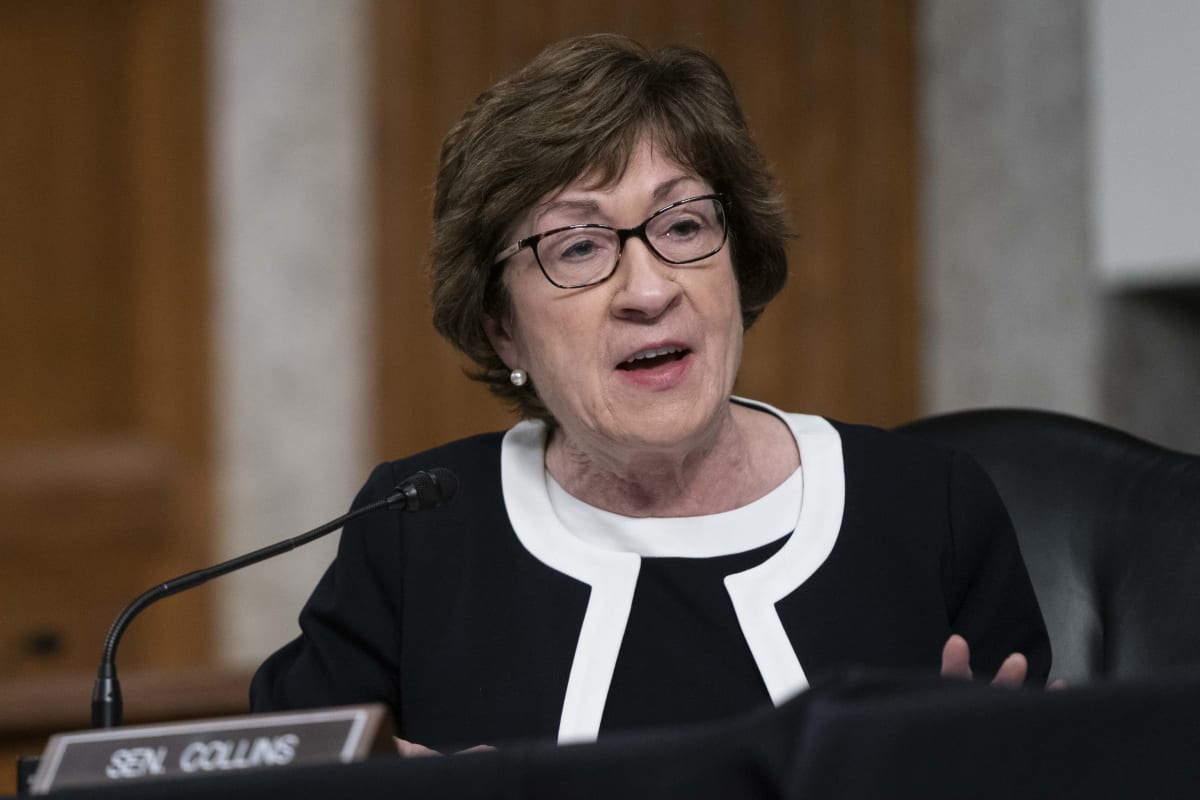
Senator Susan Collins (R-ME) said she would likely oppose extending military operations without congressional authorization if the conflict continued past the 60-day mark.
Speaking at the Semafor World Economy summit, Collins stated, “It is very likely that I would vote not to authorize further hostilities,” adding that she had “always wanted this operation to be brief but successful.”
She emphasized her long-held position regarding the War Powers Resolution, noting, “I have said from the very beginning that if the military hostilities in Iran continue to that 60th day, then I believe the War Powers Act is implemented, and the president would need congressional authorization to continue the war in Iran.”
Senator Thom Tillis (R-NC) expressed similar concerns, indicating that his support for continued military action could depend on the timeline and clarity of US objectives.
In an interview, Tillis said it would be “difficult” to extend the conflict beyond the 60-day limit. “What’s concerning me now is we’re coming up on the 45-day mark,” Tillis said.
“Sixty days is important with respect to the War Powers Resolution, and I’m not quite clear what the strategic objectives are,” he added.

The War Powers Resolution of 1973 requires the president to notify Congress within 48 hours of military action and restricts unauthorized military engagement to 60 days.
That deadline is approaching in the current conflict, which began on February 28 with joint US-Israel strikes targeting Iranian leadership, military assets and nuclear facilities.
Congressional debate intensifies as GOP divisions emerge
The evolving positions of Collins and Tillis come as Congress continues to debate its role in authorizing military action.
Democrats in both chambers have pushed multiple resolutions seeking to limit Trump’s war powers, though these efforts have largely failed to gain sufficient Republican support.
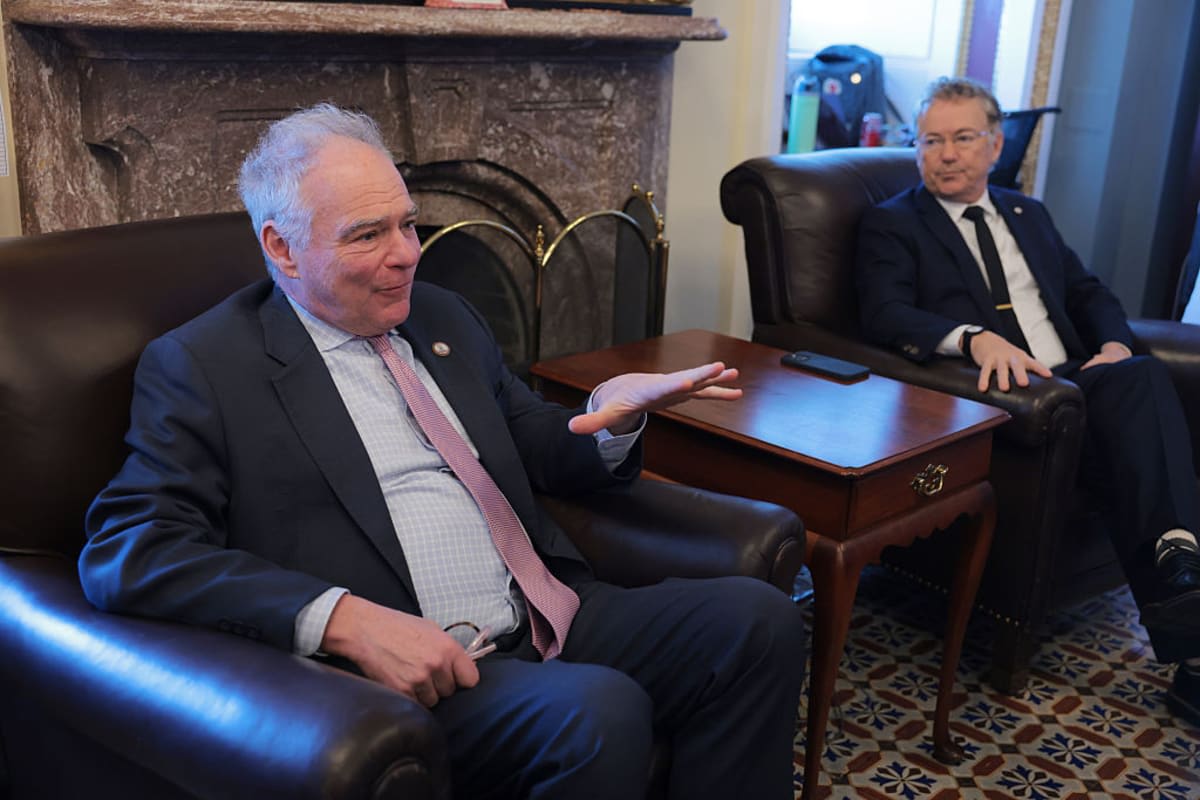
Most recently, Senate Republicans blocked another Democratic-led measure in a 47-52 vote. Senator Rand Paul (R-KY) joined Democrats in backing the resolution, while Senator John Fetterman (D-Pa) voted against it.
While some Republicans argue that limiting the president’s authority could undermine national security, others have begun to question whether Congress should play a more active role if the war continues.

Senator Lisa Murkowski (R-AK) is among those exploring legislative options, working with colleagues on a potential resolution to authorize military force beyond the 60-day window.
The effort reflects a growing expectation among some lawmakers that congressional approval may be required if operations extend further.