White House says peace preferred but ready to ‘unleash hell’ on Iran
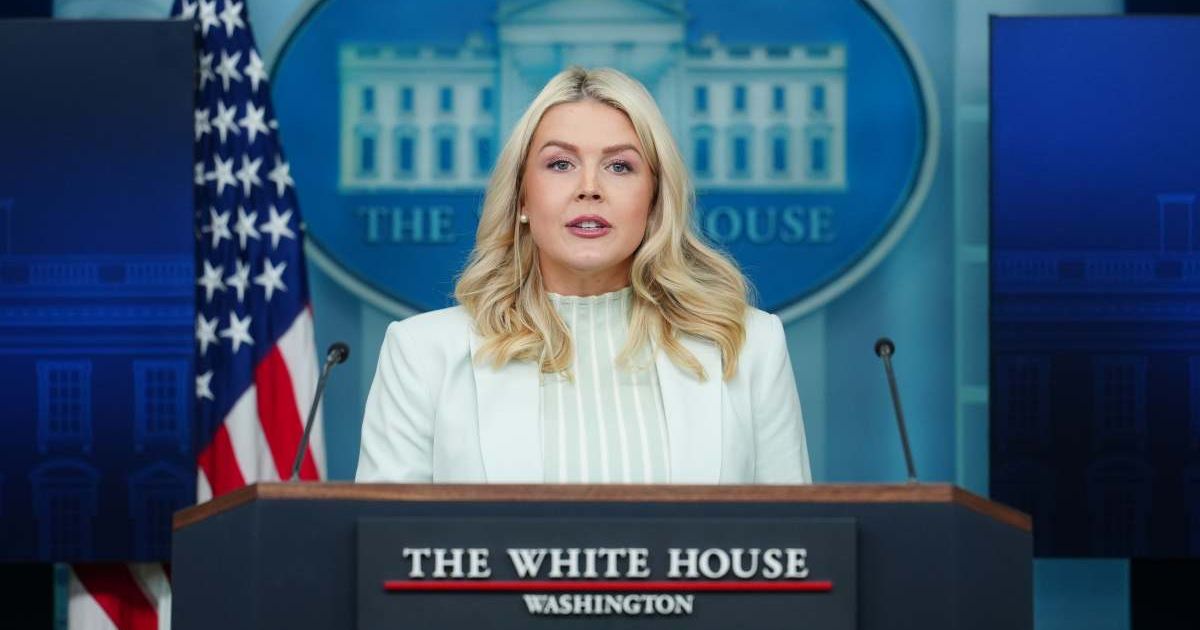
WASHINGTON, DC: White House Press Secretary Karoline Leavitt on Wednesday, March 25, said President Donald Trump is pursuing a dual-track approach toward Iran, combining ongoing military pressure with the possibility of diplomatic engagement.
Speaking at the daily press briefing, Leavitt said the President’s “preference is peace” but emphasized that military options remain on the table if talks fail.
.@PressSec says @POTUS' crippling of the Iranian regime during Operation Epic Fury has brought them to the table:
— Rapid Response 47 (@RapidResponse47) March 25, 2026
"The remaining elements of the Iranian regime have another opportunity to cooperate with President Trump... There does not need to be any more death and… pic.twitter.com/swZC2wqK8r
Leavitt confirmed that planned US strikes on certain Iranian energy targets have been temporarily delayed to allow space for discussions.
She said the decision followed signals that Iran may be open to engagement, though she did not provide details on the format or level of those contacts.
At the same time, she cautioned that the administration is prepared to escalate if negotiations do not produce results. “The President is willing to listen,” she said, adding that the US response would be decisive if diplomacy breaks down.
White House denies 15-point plan rejection
Leavitt addressed reports about a proposed US framework for ending the conflict, often described in media accounts as a “15-point plan.” She rejected claims that Iran has formally turned down such a proposal, stating that “they have not” and that discussions are continuing.
Reporter: Iranian state TV has said that Iran has rejected the US 15-point plan to end the war. Have these talks hit a dead end?
— Acyn (@Acyn) March 25, 2026
Leavitt: They have not. Talks continue. The WH never confirmed that 15 point plan. pic.twitter.com/Ij38hFhHJT
She also urged caution regarding details circulating in the media, describing some reports as incomplete or based on unnamed sources.
While acknowledging that certain elements may reflect ongoing discussions, Leavitt said the administration has not publicly confirmed a finalized framework.
Officials have indicated that multiple proposals and conditions are being evaluated as part of broader diplomatic efforts, though no agreement has been announced.
Navy ‘annihilated’ in historic military triumph
Leavitt described the first weeks of the operation as a significant military campaign targeting Iran’s naval and maritime capabilities.
She said US forces have conducted extensive strikes against vessels and infrastructure linked to Iran’s ability to operate in regional waters.
WH Press Sec. on Iran: "We have destroyed more than 140 naval vessels, including almost 50 mine layers. This is the largest elimination of a navy over a three-week period since World War II."
— Breaking911 (@Breaking911) March 25, 2026
pic.twitter.com/oa5Tok0yRY
According to the White House, the campaign has focused on reducing threats to commercial shipping and limiting Iran’s capacity to deploy naval assets.
Defense officials have reported ongoing operations aimed at securing maritime routes and protecting energy flows in the region.
Leavitt said the objective is to degrade Iran’s operational reach at sea, though the Pentagon has not released full independent assessments of the scale of damage.
Thousands of enemy targets struck successfully
The Press Secretary said US forces have carried out thousands of strikes since the start of the operation, targeting a range of military sites.
She noted that the campaign has included facilities linked to missile systems, drones, and other strategic assets.
White House on Iran:
— Open Source Intel (@Osint613) March 25, 2026
“TRUMP DOES NOT BLUFF; HE IS PREPARED TO UNLEASH HELL. IRAN SHOULD NOT MISCALCULATE AGAIN.” pic.twitter.com/hmQT6s32jS
Leavitt added that the pace of Iranian missile and drone activity has declined since the initial phase of the conflict, though sporadic attacks continue.
Military officials have attributed the change to sustained pressure on key infrastructure.
Despite ongoing operations, Leavitt reiterated that the administration is leaving room for a diplomatic outcome. She said the President remains open to a resolution that addresses US security concerns while avoiding further escalation.