'They'll never be there': Trump buries NATO with 'shameful' verdict after Iran war betrayal
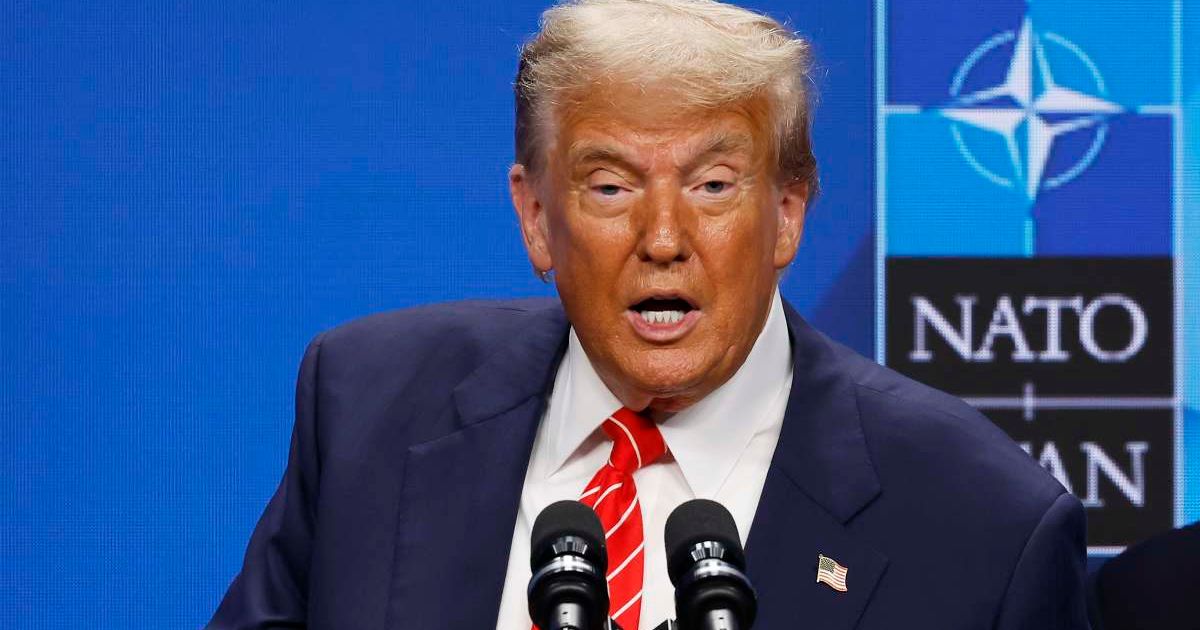
WASHINGTON, DC: President Donald J Trump unleashed a devastating verbal assault on NATO during a live telephone appearance on Sunday, April 12, on Fox News, branding the multi-decade alliance "shameful" and announcing an immediate reexamination of America’s commitment to its partners.
The president’s fury follows the refusal of European allies to support the US military offensive against Iran, a snub Trump says proves that NATO will never truly "be there" for the United States when it matters most.
"NATO is shameful," Trump declared, noting that while the US spent $350 billion defending Europe via Ukraine aid, the favor was not returned when the US moved to "obliterate" the Iranian threat.
Trump: "NATO is shameful ... we have to reexamine NATO" pic.twitter.com/IuTKJP9FkR
— Aaron Rupar (@atrupar) April 12, 2026
Despite his disappointment, the president touted the sheer power of the American military, which he claims he "rebuilt" in his first term.
"We didn't need any help," Trump asserted, framing the alliance's absence as a betrayal of a relationship that has been one-sided for twenty-five years.
Trump calls NATO hesitation a fatal alliance flaw
The president didn't hold back on the specifics of his disappointment, characterizing NATO's reluctance to join the Iran conflict as a fatal flaw in the alliance.
He argued that if he had used force, he might have dragged the Europeans into the fold, but they would have come "begrudgingly" and "stayed way behind" the front lines.
To Trump, this lack of initiative confirms his long-held suspicion that NATO is a burden rather than a benefit.
President Trump on NATO : 🇺🇸 We're very disappointed with NATO, very, very disappointed that they didn't come. Now they want to come and they want to help with the Strait.
— Donald J Trump Posts TruthSocial (@TruthTrumpPost) April 12, 2026
And it won't take long to clean it out. So we're going to clean out the Strait and they'll be able to use… pic.twitter.com/FLuNjSuiuH
In a shocking reversal, the president revealed that NATO members have now suddenly expressed interest in "helping" with the Strait of Hormuz blockade and mine-clearing operations.
While Trump acknowledged their late arrival, he remained unimpressed. "Now they want to come and they want to help with the Strait... we're very, very disappointed that they didn't come [initially]," he remarked, emphasizing that the US had already broken the back of the Iranian regime without them.
Keir Starmer labeled 'Neville Chamberlain' over delays
UK Prime Minister Keir Starmer was a primary target for the president’s "sensational" criticism.
Trump mocked Starmer’s pledge to send military equipment only after the conflict concluded.
"I said, you don't need equipment when the war is over. You need the equipment before the war starts or during the war," Trump recounted. He went as far as to label Starmer’s stance a "Neville Chamberlain type of statement," invoking the ghost of 1930s appeasement.
Trump: "NATO is shameful…Startmer said we'll send the equipment after the war is over…That's a Neville Chamberlain-type statement…We helped them with Ukraine…[Germany] said 'We didn't start the war.' Well, we didn't start the war in Ukraine…We have to reexamine NATO." pic.twitter.com/cEEmRTUH6e
— The Bulwark (@BulwarkOnline) April 12, 2026
The president expressed profound disappointment in the United Kingdom, a country he noted he loves due to his mother’s Scottish heritage.
However, Starmer's refusal to authorize early military support during the critical stages of 'Operation Epic Fury' has reportedly fractured the relationship with Trump suggesting that the UK is no longer the reliable first ally it once was.
Trump accuses Germany of hypocrisy on conflict origins
Germany also faced the president’s wrath for its perceived hypocrisy regarding the war's origins and funding.
Trump mocked German leadership for demanding the war stop while simultaneously claiming they "didn't start this." He contrasted the current administration's "incompetent" spending on Ukraine with his own business-first approach to NATO.

"I sell things to NATO, and they do what they want with it... I sell things at full price," Trump noted.
The president took particular offense at Germany’s rhetoric given that the US effectively subsidized European security for years.
He argued that the current problems with Russia and Ukraine would "never have happened" if he were in the White House, and that Germany's refusal to back the US in Iran, despite receiving billions in indirect security support, makes the entire NATO framework "bad" and ripe for dismantling.
Trump cites Venezuela as model for US intervention
Amid the NATO fallout, the president pointed to South America as a model of successful American intervention.
"You look at Venezuela. We're doing so well with Venezuela," Trump stated, noting that the country is now "making more money than they've ever made before" under the current US-led dynamic.
Crucially, the president added that the United States is "participating in those profits."
Trump: "What a great time to have Venezuela. By the way, Venezuela now is making more money than they've ever made before, and we are participating in those profits." pic.twitter.com/qts3LIfOrj
— Aaron Rupar (@atrupar) April 12, 2026
Trump used the Venezuela success story to justify his massive military spending, arguing that "having Venezuela" was made possible by the "greatest equipment in the world" he procured during his first term.
He contrasted this profitable and decisive action with the "shameful" bureaucratic delays of NATO, suggesting that the US is better off acting as a unilateral superpower that secures its own interests and profits.
Trump says Iran talks collapsed over nuclear issue
Providing a final update on the Islamabad summit, Trump confirmed that while negotiations with the 71-man Iranian team were "intensive" and even "friendly" toward the end, the deal died on a single issue: nuclear weapons.
"They refused to give up their nuclear ambition," Trump said. "That's the only point, frankly, to me. That was the most important point by far."
President Trump on Iran: 🇺🇸🇮🇷 We had a very intensive Negotiation, and toward the end it got VERY FRIENDLY, and we got just about every point we needed, except for the fact that they refused to give up their nuclear ambition.
— Donald J Trump Posts TruthSocial (@TruthTrumpPost) April 12, 2026
And that's the only point, frankly, to me, that was… pic.twitter.com/KS1ESOk1Ng
Because of this "nuclear deadlock," the president is moving forward with the total blockade of the Strait of Hormuz, regardless of NATO's late-stage offers of assistance.
He warned that the US is "locked and loaded" to finish the job, with or without the allies he is now ready to reexamine.